4.5.1. Build adapters
Because our application is quite simple, the adapter between core and runtime will not be very complicated, mainly for the Runtime Context.
Runtime context adapter
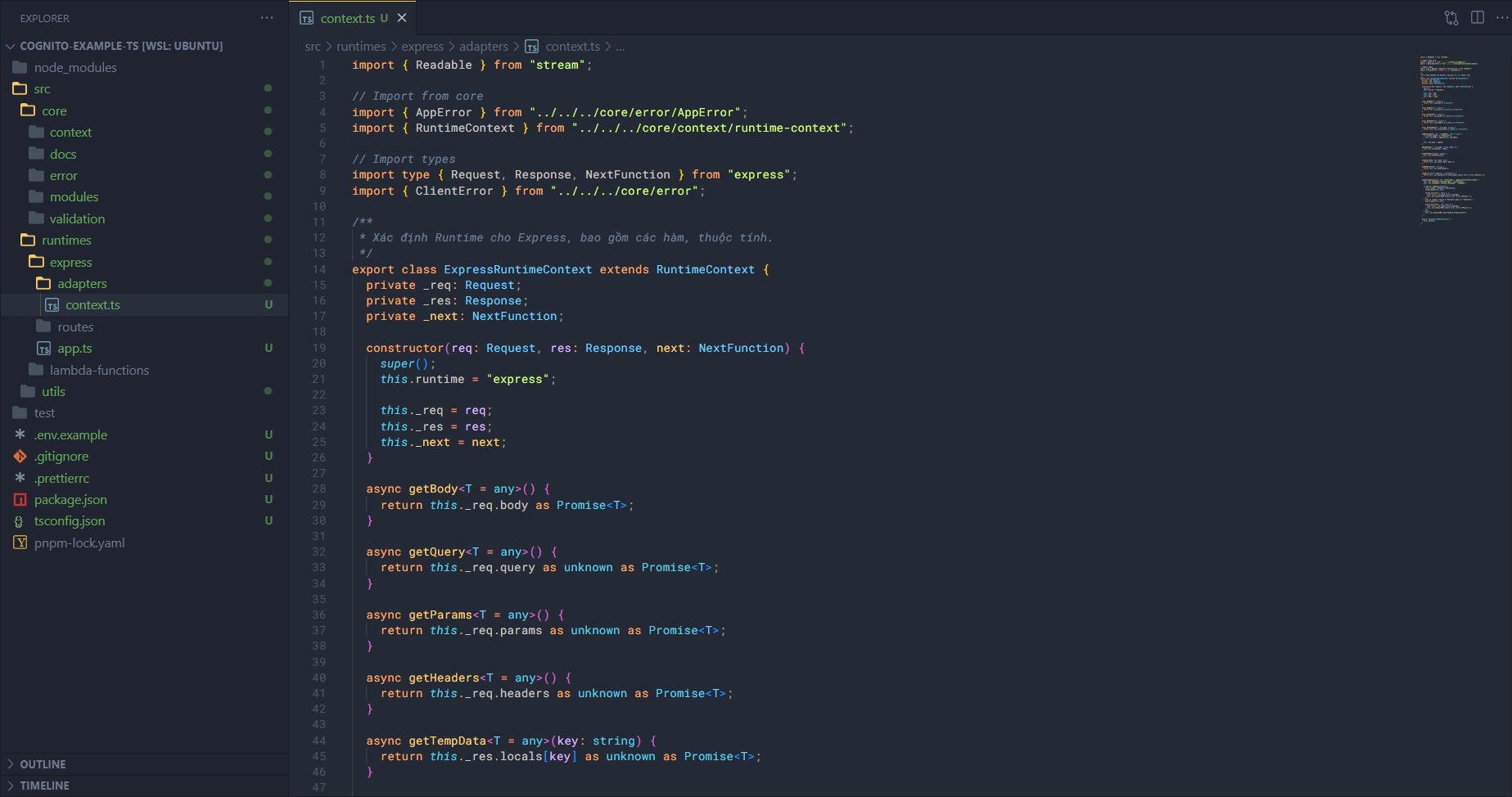
First, we will create the file context.ts in the adapters directory and add some code.
Import some information as follows.
import { Readable } from "stream";

// Import from core
import { AppError } from "../../../core/error/AppError";
import { RuntimeContext } from "../../../core/context/runtime-context";

// Import types
import type { Request, Response, NextFunction } from "express";
import { ClientError } from "../../../core/error";
In the previous step we created the RuntimeContext class, so I will extend from this class to create ExpressRuntimeContext.
/**
 * Xác định Runtime cho Express, bao gồm các hàm, thuộc tính.
 */
export class ExpressRuntimeContext extends RuntimeContext {
  private _req: Request;
  private _res: Response;
  private _next: NextFunction;

  constructor(req: Request, res: Response, next: NextFunction) {
    super();
    this.runtime = "express";

    this._req = req;
    this._res = res;
    this._next = next;
  }

  async getBody<T = any>() {
    return this._req.body as Promise<T>;
  }

  async getQuery<T = any>() {
    return this._req.query as unknown as Promise<T>;
  }

  async getParams<T = any>() {
    return this._req.params as unknown as Promise<T>;
  }

  async getHeaders<T = any>() {
    return this._req.headers as unknown as Promise<T>;
  }

  async getTempData<T = any>(key: string) {
    return this._res.locals[key] as unknown as Promise<T>;
  }

  setBody(update: any | ((oldBody?: any) => any)) {
    if (typeof update === "function") {
      this._req.body = update(this._req.body);
    }

    this._req.body = update;
  }

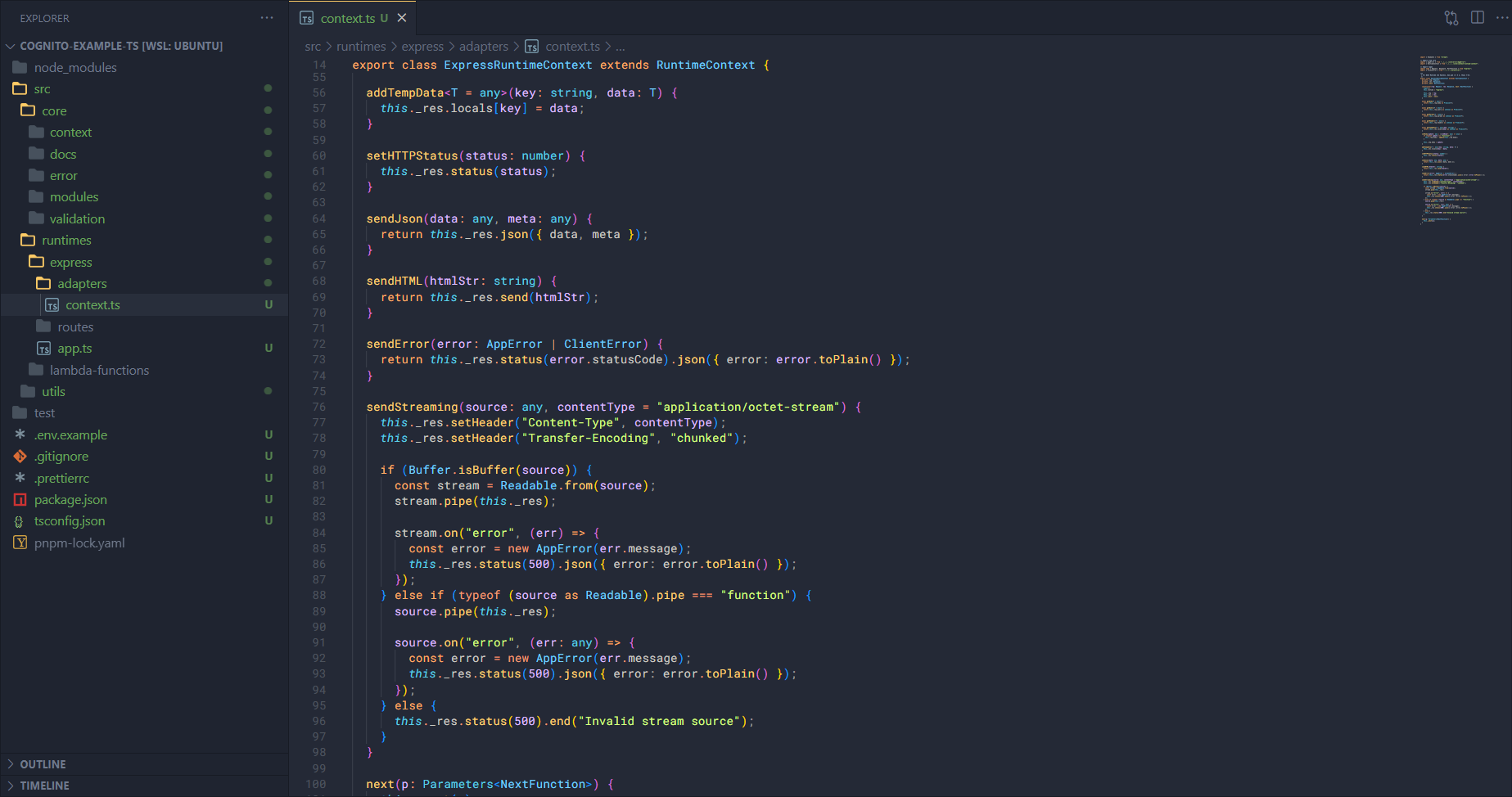
  addTempData<T = any>(key: string, data: T) {
    this._res.locals[key] = data;
  }

  setHTTPStatus(status: number) {
    this._res.status(status);
  }

  sendJson(data: any, meta: any) {
    return this._res.json({ data, meta });
  }

  sendHTML(htmlStr: string) {
    return this._res.send(htmlStr);
  }

  sendError(error: AppError | ClientError) {
    return this._res.status(error.statusCode).json({ error: error.toPlain() });
  }

  sendStreaming(source: any, contentType = "application/octet-stream") {
    this._res.setHeader("Content-Type", contentType);
    this._res.setHeader("Transfer-Encoding", "chunked");

    if (Buffer.isBuffer(source)) {
      const stream = Readable.from(source);
      stream.pipe(this._res);

      stream.on("error", (err) => {
        const error = new AppError(err.message);
        this._res.status(500).json({ error: error.toPlain() });
      });
    } else if (typeof (source as Readable).pipe === "function") {
      source.pipe(this._res);

      source.on("error", (err: any) => {
        const error = new AppError(err.message);
        this._res.status(500).json({ error: error.toPlain() });
      });
    } else {
      this._res.status(500).end("Invalid stream source");
    }
  }

  next(p: Parameters<NextFunction>) {
    this._next(p);
  }
}
In the next section we will use this class object with the pipeline.